
Ethical AI Use in Behavioral Health: Supporting Provider Judgment
Featuring: Ashleigh Gardner-Cormier, Founder of Aluma Hub
With AI-assisted tools now widely used in behavioral health settings, discussions around the ethical use of AI are happening more frequently. Many of those discussions focus on AI failure modes such as hallucinations, bias, privacy concerns, and data security risks, often arriving at a familiar recommendation for practitioners: be careful and maintain professional judgment.
The advice, though brief, is sound. The problem is that it leaves important questions unanswered: What happens when AI performs well enough that human behavior begins to unknowingly change in response?
While discussions of ethical AI use often focus on the behavior of the technology itself, far less attention is given to the behavior of the professional using it. Yet human behavior may be the single most important factor in determining whether professional judgment remains active during AI use.
Understanding the Human Failure Mode: Ethical Drift
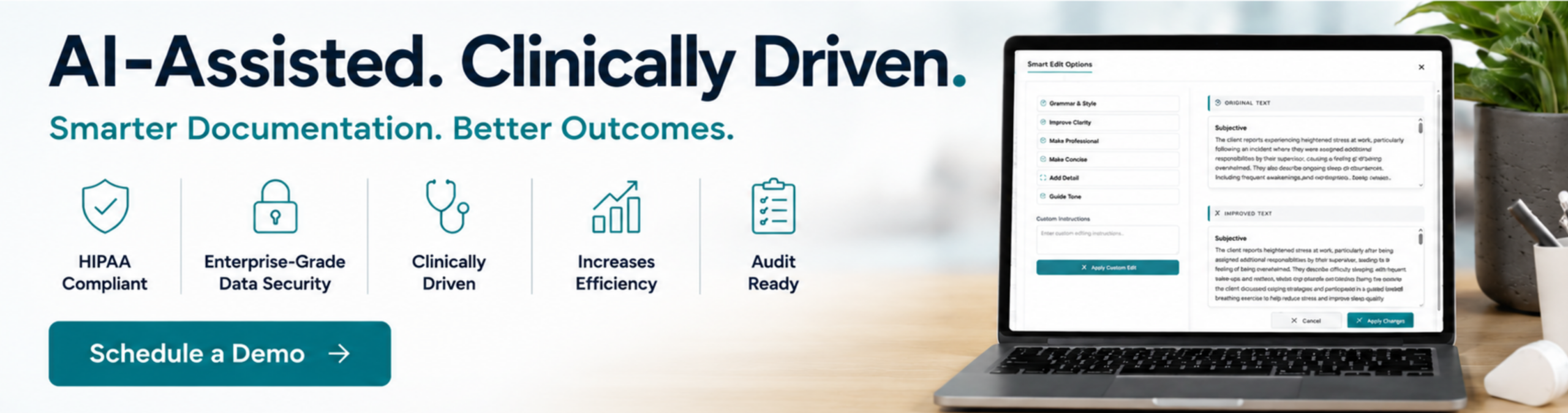
Imagine a therapist using an AI-assisted note-writing tool for the first time. Following a session, they carefully compare the generated note against their recollection of the conversation. They review every section, question the wording, and make edits wherever necessary. The next day, they repeat the process. A week later, the review becomes a little faster. A month later, fewer edits are required because the notes are generally accurate. Six months later, they may find themselves reviewing the note rather than truly evaluating it. Nothing dramatic has happened. The provider has simply become comfortable with the tool, allowing AI to take the lead.
This phenomenon can be referred to as Ethical Drift. Ethical drift is the gradual erosion of professional evaluative standards through repeated low-stakes accommodations. It accumulates through convenience, time pressure, and institutional normalization until passive acceptance becomes the default. Put simply, ethical drift occurs when repeated shortcuts that seem reasonable in the moment gradually change how we evaluate information.
Unlike an obvious documentation error or inaccurate recommendation, ethical drift rarely announces itself. There is no moment when a provider consciously decides to lower their standards. Instead, the process unfolds gradually through a series of small decisions that feel entirely reasonable at the time. That is precisely what makes it difficult to recognize and, as a result, unlikely to be discussed.
Why Ethical Drift Happens in Behavioral Health
Ethical drift is not usually the result of poor intentions or inadequate training. In many ways, it reflects predictable human psychology operating within the specific realities of behavioral health practice.
Providers in this field operate under significant pressure while documentation requirements continue to grow. Time is often limited and emotional fatigue is common. When a tool consistently helps complete tasks more efficiently, trust naturally develops, and with trust comes a gradual reduction in the cognitive effort invested in monitoring the tool’s output. The more reliably a system performs, the less we tend to scrutinize it. That is not a character flaw. It’s how humans work.
What makes this dynamic particularly consequential in behavioral health is that the stakes of reduced scrutiny are high. The outputs being reviewed are not spreadsheets or scheduling confirmations. They are clinical records that shape treatment, inform care decisions, and document the lived experiences of people in vulnerable circumstances.
Recognizing and Interrupting Ethical Drift
Awareness alone cannot prevent ethical drift, but drift cannot be prevented without it, which means the familiar admonition to providers to simply “be careful” must be made actionable.
One approach that has proven useful in practice is a simple reflective framework called ARP: Attune, Reflect, Protect.
Attune involves noticing our relationship with the technology itself and asking ourselves whether we have become more accepting of AI-generated outputs than we intended. Are we reviewing the output or simply approving it?
Reflect requires a deliberate pause to examine assumptions. What conclusions contained in this output have I independently evaluated? What alternative interpretations might exist?
Protect involves taking whatever action is necessary to preserve professional judgment. Sometimes that means revising the output or seeking additional information. Other times, it simply means slowing down enough to ensure that convenience is not driving the decision-making process.
ARP is designed to keep professional judgment actively engaged, particularly under the conditions most likely to contribute to ethical drift: time pressure, fatigue, and familiarity. Because those same conditions also make reflection less likely, practices such as ARP are most effective when embedded into routine workflows as intentional mile markers rather than added as an afterthought. Structured moments of reflection reduce the likelihood that professional judgment gradually gives way to passive acceptance.
Supporting Provider Judgment in an AI-Enabled Environment
Provider judgment is central to behavioral health practice. It allows clinicians to navigate ambiguity, understand context, recognize nuance, and appreciate the complexities of human experience. These responsibilities do not disappear when AI enters the workflow. If anything, they become more important.
Privacy, security, compliance, and technical safeguards all matter and should remain priorities when implementing AI in behavioral health settings. However, technical safeguards alone are not sufficient. The conversation also must include human behavior, because no policy can prevent ethical drift if the professional experiencing it doesn’t recognize when it’s happening.
The most important question is not whether AI is changing behavioral health practice. It almost certainly is. The more important question is whether providers are aware of how AI is changing them. Helping clinicians recognize the subtle moments when reflection begins to give way to routine and giving them practical tools to intervene when it does may be the most consequential work ahead of us.