
Posts by Barrett Merrill
Exciting News! Checkpoint EHR Partners with Upheal to enhance mental health technology!

We are thrilled to announce a landmark partnership between Checkpoint and Upheal! This collaboration marks a significant step forward in our mission to equip mental health professionals with highly intuitive and efficient behavioral health software while ensuring the highest standards of care and data security. Upheal, a leader in the AI-assisted progress notes space, has…
Read MoreCommon CMS 1500 Form Mistakes to Avoid

Regardless of the size of your practice, you must submit insurance claims correctly to receive payment for the work you do. One of the key tools in this process is the CMS-1500 form. This is the standard claim form that behavioral health providers use to bill Medicare, Medicaid, and most private insurance payers. For mental…
Read More8 Business Pillars for Therapy Practice Health
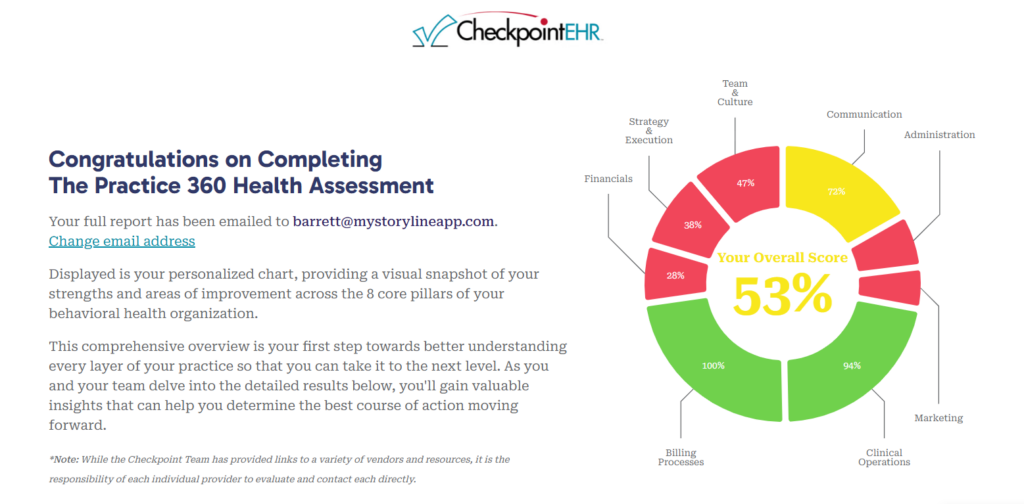
In the world of mental and behavioral health, it’s easy to focus so much on the care we offer clients that we forget to check in on the health of our own practice. But just like our clients need reflection and self-awareness to grow, so do our businesses. For private practice owners, clinical directors, and…
Read MoreKey Differences in Insurance vs Medicaid Billing

As a mental or behavioral health therapist, understanding the billing process is critical to running a sustainable practice. This is especially true if you accept both private insurance and Medicaid. While your aim is to get reimbursed by each payer for your services, you will find that the steps vary by payer. Mental health credentialing,…
Read MoreWhat is a Superbill for Therapy?

A Guide for Mental and Behavioral Health Therapists As a behavioral health therapist, you may see clients who want to use their out-of-network insurance benefits. In these cases, the term superbill often comes up. But what exactly is a superbill and how does it work in a private practice setting? And what do you, as…
Read MoreAI-Assisted Notes: The Benefits & Cautions
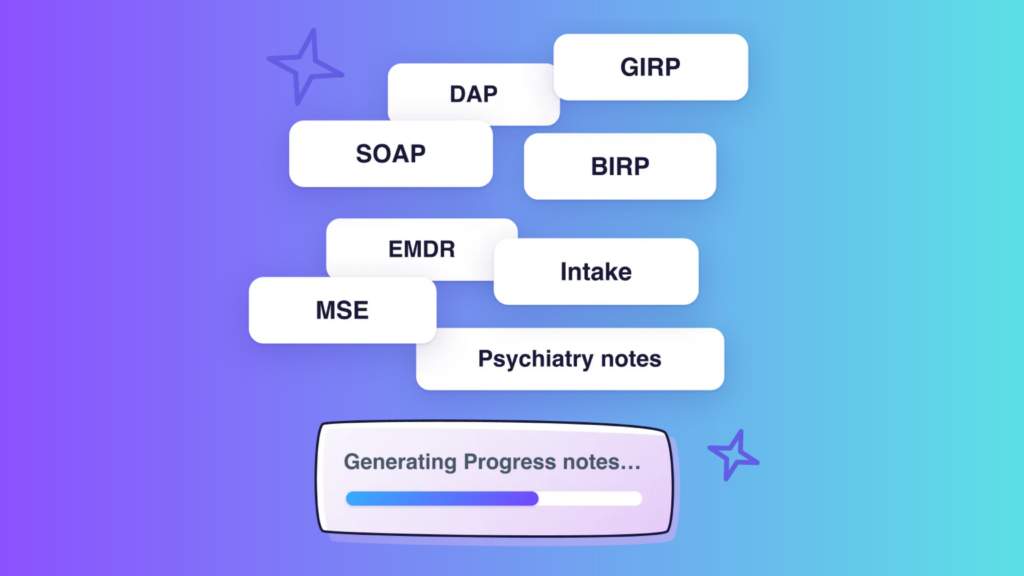
by CheckpointEHR, in collaboration with Upheal In a profession where documentation is essential—but often overwhelming—the idea of using artificial intelligence (AI) to assist with progress notes has moved from science fiction to real-world solution. At CheckpointEHR, we’re always looking for ways to help behavioral health professionals work more efficiently and sustainably. That’s why we’re excited…
Read MoreDon’t Dread Continuing Education (CE) Requirements

Written by: Tobin Richardson, Founder of Save the Therapist We therapists like to learn about and refine our craft. But checking off CE requirements can be much more like a dreaded checkmark on your license renewal to-do list. When approached intentionally, CEs can be a high-value part of your clinical development. They can actually sharpen…
Read MoreHow Do I Become a Clinical Supervisor for Therapists?

At a certain point, many seasoned therapists want to expand their income and support new clinicians by becoming supervisors. Clinical supervision is a meaningful way to empower pre-licensure mental health therapists while deepening your own practice. But how exactly do you become a clinical supervisor? What requirements does the board require? And once you’ve earned…
Read MoreHow to Use Billing Code 90791 as a Therapist

As a mental or behavioral health therapist, navigating billing codes can feel like a different language. But understanding how to use each code accurately ensures proper reimbursement and compliance with insurance standards. One of the most foundational codes for mental health professionals is 90791. In this post, we’ll break down what 90791 means, when to…
Read MoreHow to Write Better Clinical Notes

A Guide for Mental and Behavioral Health Therapists Clinical notes are a bittersweet necessity in mental health work. They support treatment planning, continued care, reimbursement, and legal protection. Yet, they can also be time-consuming, confusing, or anxiety-inducing for clinicians who struggle to write them well. No matter what stage you are as a therapist, this…
Read More