A Sustainable Medicaid Mental Health Practice Is Possible
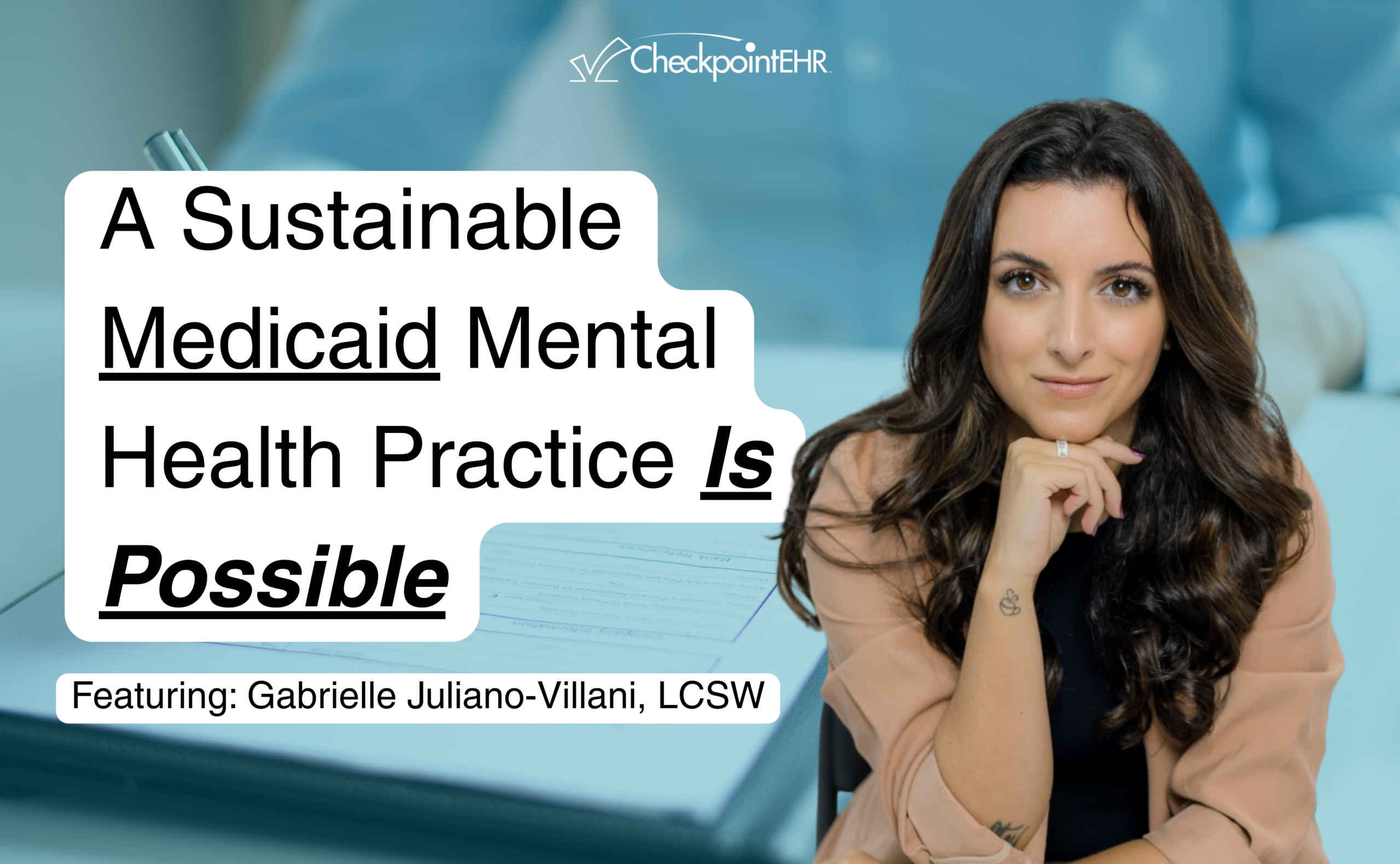
…And it doesn’t require burning yourself out to get there.
Many mental health practices accept Medicaid because they care deeply about access to care. They want their practices to serve their local communities, not just those who can pay out of pocket.
But then, reality hits.
Thin margins.
Complicated billing rules.
Cash flow that feels wildly unpredictable.
Admin work that somehow keeps growing.
If you’re already accepting Medicaid as a provider and finding yourself asking, “Is this actually sustainable?” the problem likely isn’t your clinical skill. You’re running into systems that weren’t built with clarity, efficiency, or provider well-being in mind.
The good news?
Sustainability is possible, and it comes from systems that run even when you’re tired, not from longer hours.
Why Medicaid Feels So Difficult (Even When Your Clinical Work is Strong)
Medicaid-based practices aren’t struggling because clinicians don’t work hard enough.
They struggle because:
- Billing rules vary by state and change often
- Denials and payment delays disrupt cash flow
- High-volume services strain workflows that were never designed to scale
- Financial modeling is often missing or oversimplified
- EHR systems are underutilized or used reactively instead of strategically
Medicaid demand is real, and volume exposes weak workflows fast. Scheduling, eligibility checks, authorizations (when required), notes, claim submission, follow-ups, and resubmissions can swallow the day. When all of that stacks up, practices end up in survival mode.
This ongoing stress and higher administrative load doesn’t come from mismanagement. It happens because most practices are never shown how to build Medicaid into a sustainable business model, rather than treating it as just another payer source.
What Actually Keeps Practices Profitable With Medicaid
Sustainability doesn’t come from seeing more clients or working longer hours. It comes from intentional systems, ongoing routines, clear roles, and regular check-ins that prevent bigger workflow fires from breaking out.
Many practices assume their margins are low because of reimbursement rates, when the real issue is delayed payments tied to preventable documentation or eligibility errors. Fixing that alone can dramatically stabilize cash flow without adding a single new client.
In successful Medicaid-based practices, a few things are consistently true:
- Billing is optimized, not rushed. Claims are submitted cleanly, denials are tracked, and delays are anticipated instead of panicked over.
- Workflows support volume without chaos. Documentation, scheduling, and follow-up processes are designed to handle demand without exhausting staff.
- Financial decisions are based on real data. Not guesses, but actual modeling that shows what’s working and what needs to change.
- Medicaid is treated as a strength, not a liability. When leveraged correctly, Medicaid offers stability, consistency, and scale that many practices underestimate.
These are operational shifts, not mindset hacks, and they’re learnable and repeatable.
A Practical Perspective From the Field
Gabrielle Juliano-Villani, LCSW, has spent years working with solo providers, group practices, agencies, and mental health organizations, navigating Medicaid and complex payer systems.
Across all of them, the patterns she sees are clear:
- Practices aren’t failing. They’re under-supported.
- Most issues stem from workflows, billing structures, and financial visibility.
- When those pieces are aligned, Medicaid-based practices can be both profitable and sustainable to run.
Gabrielle’s work lives at the intersection of operations, compliance, and sustainability, not theory. It’s the kind of operational support that actually helps practices function on a Monday morning.
Get Real Support: Free Live Webinar with Checkpoint EHR
EHRs play a massive role in whether Medicaid practices stay regulated and financially stable.
When systems are set up intentionally, they can:
- Reduce billing errors and delays
- Support consistent documentation
- Improve team efficiency
- Provide clearer financial insight
Checkpoint EHR and Gabrielle Juliano-Villani share a focus on making operational systems actually work for real-world mental health practices, especially those serving Medicaid populations. If your practice already accepts Medicaid and you’re feeling the strain, we have a free, live webinar designed for you.
How to Run a Profitable Medicaid-Based Mental Health Practice
Join us on Wednesday, February 11th, 2026, at 1:00 p.m. ET, where Gabrielle Juliano-Villani will walk through practical strategies for building a sustainable Medicaid-based mental health practice, including:
- Optimizing Medicaid billing to reduce denials and payment delays
- Building workflows that support high-volume services without burnout
- Financial modeling strategies to improve margins
- Leveraging the real benefits of Medicaid
- Avoiding common operational and administrative pitfalls
This session is designed for solo providers, group practices, agencies already accepting Medicaid, or any provider considering expansion with Medicaid. You’ll walk away with a realistic picture of how Medicaid can support long-term sustainability beyond just reimbursement rates.
The session is straightforward, high-value, and focused on what actually works in real-world Medicaid mental health practices.
The webinar recording will be emailed to everyone who registers, whether or not you’re able to attend live.
Register for the free webinar today.
If Medicaid sustainability has been on your mind, this webinar will offer clear, grounded next steps forward.
Gabrielle Juliano-Villani is a Medicaid billing and practice management consultant who helps mental health practices and agencies improve profitability, streamline operations, and navigate the complexities of Medicaid reimbursement. Additionally, Gabrielle is the creator of the Medicare Consulting for Therapists Facebook Group with nearly 8k clinical members.
www.medicareconsultingfortherapists.com